Trustworthy Life Cycle Assessment Starts with Transparent Data
Behind an environmental footprint, can we trace the sources, boundaries and assumptions?
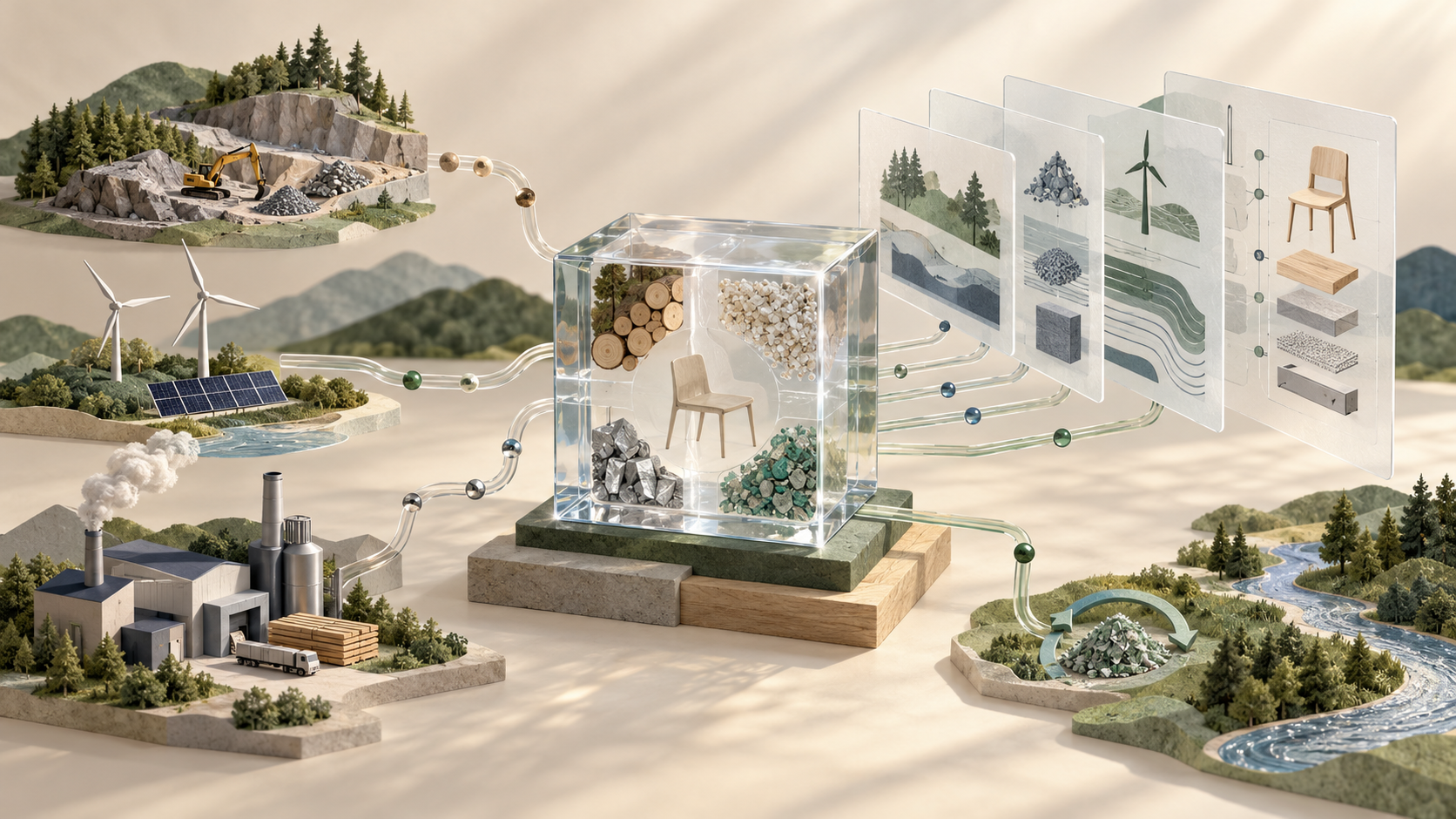
Research insights based on published literature and public resources. Consult the sources for publication types, original authorship and institutional affiliations.
The question
An environmental assessment can change with its data, geography, year and system boundary. Understanding a footprint requires knowing how it was produced and whether it fits the question at hand.
What the literature shows
The review of LCA data systems identifies inconsistent methods and incompatible formats as challenges to data quality and interoperability. Traceable sources, common rules and open tools can improve sharing and comparability. Accessibility and suitability still need separate assessment.
Related member research and resources
The selected works address data systems, background-inventory transparency and Chinese sector datasets for cement, aluminium and lithium-ion batteries. TianGong LCA connects these resources to modeling and gives readers an entry point for examining processes, sources and versions.
What remains open
Can data from different regions and years be combined? How should gaps and uncertainty be documented? These questions require study-specific checks; an open-data label alone does not establish fitness for use.